




Site Visits in Town Planning and Design: What Project Teams Look For and Why It Matters
Topics
Site visits are one of the most important stages in early-stage planning and design, yet they are often underestimated.
Planning applications are assessed against policies and supported by drawings, reports and technical evidence. But every project is ultimately responding to a real place, with its own character, constraints, opportunities and communities. A well-documented site visit helps project teams understand that reality from a local perspective before key design decisions are made.
The most valuable site visits are not simply about documenting what exists. They help planners, designers, clients and stakeholders build a shared understanding of what a proposal needs to respond to. Site visits are also often opportunities to walk a site with local stakeholders, who have detailed insights on local issues.
Why Site Visits Matter
In recent years, there's been substantive change in what information we can access on a place through apps like Google Street View. Desktop research has never been more powerful. Teams can access aerial imagery, mapping, planning histories, policy documents and environmental data without leaving their desks.
But no amount of desk-based analysis fully replaces spending time on site.
Through walkabouts and on-site observations, a site visit reveals those all important important details that may not be visible in plans or datasets, including:
- Informal paths and desire lines that show how people actually move through an area
- Changes since the latest aerial imagery or street-level photography
- Relationships between neighbouring homes, gardens and public spaces
- Topography, level changes and accessibility challenges
- Existing trees, landscape features and local character
- Traffic, servicing and parking pressures
- Signs of anti-social behaviour, safety concerns or maintenance issues
- Drainage features, watercourses or surface water problems
Perhaps most importantly, a site visit helps teams understand how a place feels. Character, activity, enclosure, views and the relationship between different spaces are often difficult to assess from drawings alone.
What Project Teams Look For
Different professionals bring different perspectives to a site visit.
A planning consultant may focus on planning constraints, neighbouring amenity and policy considerations. An architect may assess orientation, frontage, scale and how a building relates to the street. A landscape architect may study views, planting, public realm and landscape character. Engineers may identify drainage, utilities and access issues.
Each observation helps build a more complete understanding of the site.
The greatest value comes when these perspectives are combined. Site visits create an opportunity for project teams to align around shared evidence before design work progresses or planning applications are prepared.
Site Visits and Community Knowledge
Professional observations are only part of the picture.
People who live, work or spend time in an area often understand aspects of a place that are difficult to identify through surveys or mapping alone. Local residents may know where flooding occurs, which routes people actually use, where parking pressure is highest, or how public spaces change throughout the day and year.
This is one reason site visits and stakeholder engagement work well together.
Site visits help project teams understand local conditions before consultation begins. Community feedback can then add lived experience and local insight that strengthens the evidence base and helps shape better-informed proposals.
Rather than competing sources of information, professional assessment and community knowledge are often complementary.
What Outcomes Should a Site Visit Produce?
A successful site visit should do more than generate photographs and notes. It should create outcomes that support decision-making throughout the project.
- A Shared Understanding of Place: The project team should leave with a common understanding of the site’s opportunities, constraints and context. This helps reduce misunderstandings and keeps planning, design and technical work aligned.
- Clear Priorities for Design and Planning: A site visit should help identify the issues that matter most. These may include access, neighbouring amenity, landscape character, movement patterns, heritage considerations or environmental constraints.
- Questions for Further Investigation: One of the most useful outcomes is identifying where specialist input is needed. A site visit may highlight the need for transport, ecology, drainage, heritage or arboricultural advice before an application is submitted.
- Evidence for Consultation and Planning: Observations made on site can help inform consultation activities, planning strategies, Design and Access Statements, Planning Statements and supporting technical reports.
Turning Site Visits into Better Projects
Because planning is ultimately about making decisions in real places, site visits and stakeholder engagement work best when they reinforce one another. Professional observations help identify opportunities and constraints; community insight helps explain how those places are experienced and used.
Together, they create a richer understanding of place—one that can support better design, stronger planning applications and more meaningful engagement.
The challenge, however, is ensuring that these insights are not lost as projects progress. That’s a topic we explore in our article on Site Visit Amnesia, and why many teams struggle to retain and reuse what they learn on site.
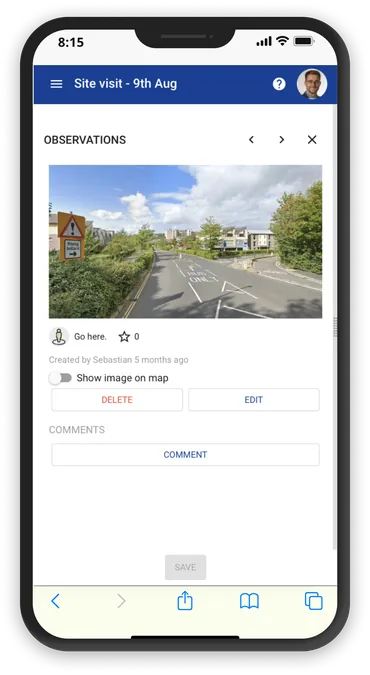
Capture site visit notes, observations, and photos in one place
Book a demo or start your free trial today.
Start Free TrialGet new articles in your inbox
Subscribe to get more insights like this delivered to your inbox.
Related Articles
Why the ‘Site Visit Amnesia’ Problem Costs You—and How to Ban It for Good
Over the past year, PlaceChangers has worked closely with urban designers, architects, and planners to understand the challenges they face when conducting site visits and walkabouts. These conversations have highlighted not only the frustrations of losing context but also the potential of site visits to unlock great projects. Site visits are key to collaborative design of shaping new places, often done with a group of stakeholders, including clients, community representatives, local council rep

How to organise walkabouts for early-stage community consultations
At the start of a masterplan exercise, walkabouts for community consultation are a simple yet highly productive engagement activity for residents and project stakeholders. Also sometimes referred to as walkabouts, these guided tours can be a practical starting point for any new design development project to map insight and inspirations for later design interventions. What do residents love about their neighbourhood? What do they hate? In what ways is the place evolving? What are some hidden gem