




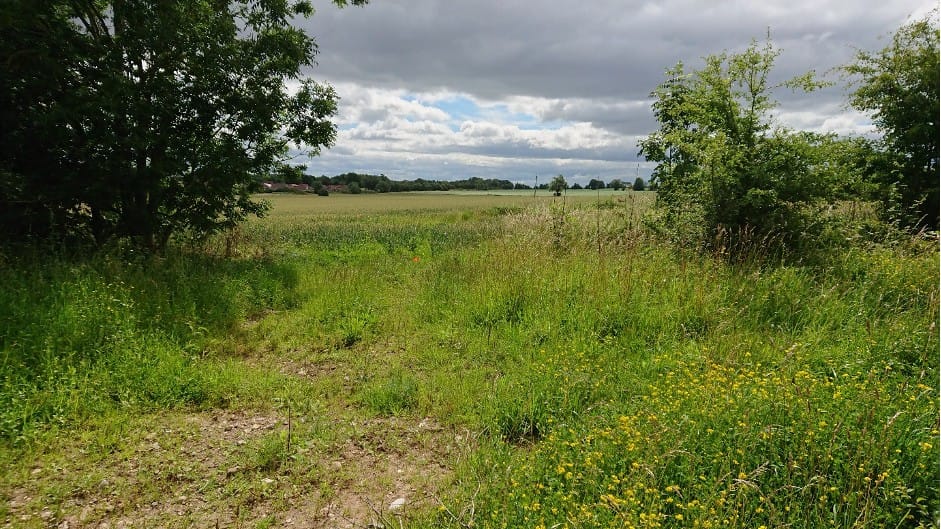
Multi-stage engagement underpins Homes England's reserved matters application in Ripon
Context
In early 2021, Homes England acquired land at West Lane, Ripon, to progress and submit a Reserved Matters Approval Application for 390 new homes within a tight timescale. The site has an interesting planning history. Council members refused an outline planning application by Gladman Developments in 2018; the Secretary of State subsequently granted the application on appeal. The outline permission led to more detailed planning proposals that were, in the end, not pursued by housebuilders. In 2020, the site was allocated, as an existing commitment, for residential development in the Harrogate District Local Plan.
West Lane is a sensitive location for development, relatively close to a World Heritage Site and Registered Park and Garden. There are two locally protected areas of nature conservation nearby.
In the approach to engagement, it was fundamentally important to communicate which parameters of the outline planning permission were already approved and therefore could not easily be changed. Therefore, community and stakeholder consultation needed to focus on the specific planning and design matters to build upon the established project parameters.
What was done
PlaceChangers advised the project team on arranging two online engagement activities aligned with their design process, together with a stakeholder event at a midpoint in pre-application preparations:
- First stage: The first iteration presented an emerging master plan based on the constraints embedded in the proposed design by the outline permission. As inputs alongside the ongoing site investigations by the design team, this stage enabled residents, community groups and others to point out specific issues that were not necessarily fully known to the team or that were of local priority. In addition, feedback on general hopes and fears enabled participants to share their high-level concerns and ideas on opportunities regarding the emerging design.
- Online public discussion: The team then held an online meeting with residents to debate key masterplan issues. The event enabled everyone to meet the project team, receive a briefing, and discuss any issues raised. In particular, the session focused on access and the proposed approach to hedgerows, especially along the eastern site boundary.
- Second stage: In a second consultation on PlaceChangers, the team presented a more detailed masterplan design for the final Reserved Matters Approval Application; the team configured a virtual guided tour of key site features. Those looking at the master plan design could visit critical aspects of the proposal and location-specific interventions. Everyone could leave responses and also comment on general topics, such as developer contributions.
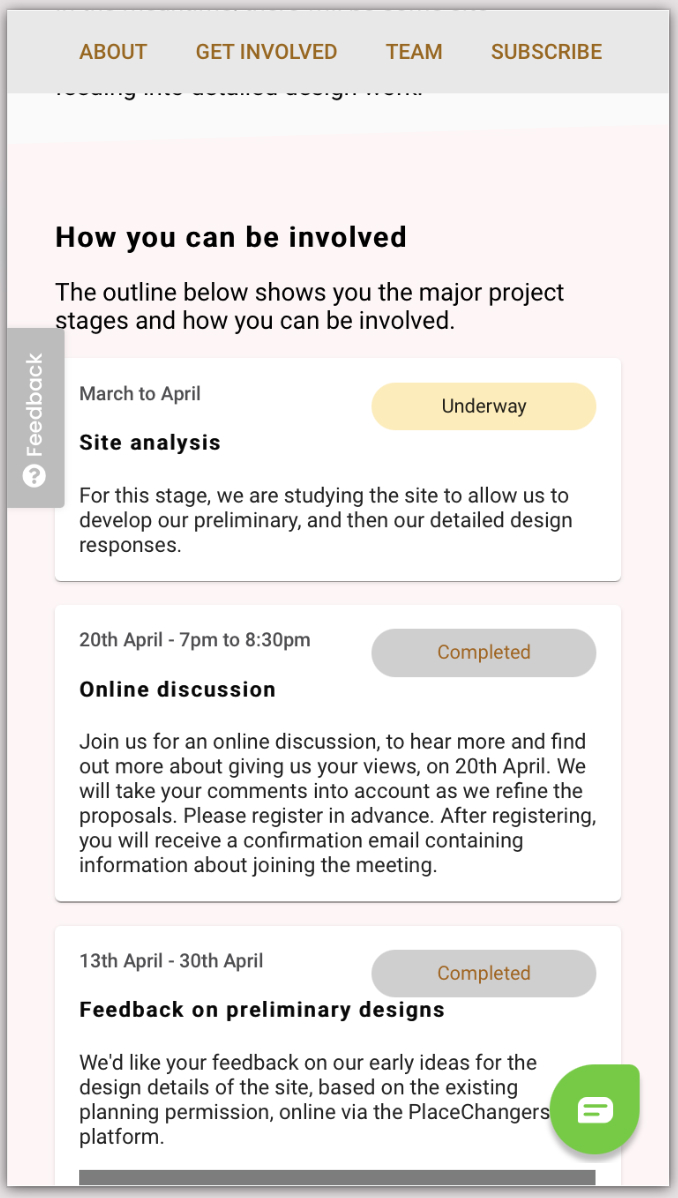
PlaceChangers provided a project page that summarised project milestones, presented the project team and offered respondents the option to subscribe to the project for updates. For boosting awareness of the proposal, PlaceChangers sent personalised postcards to local households alongside Facebook notices.
Screenshots
Outcomes
Despite the short timescale for this project, the team successfully developed a meaningful relationship with immediate neighbours to the site, with community groups and other key stakeholders. With the help of the engagement campaigns on the PlaceChangers platform, the design team engaged far and wide.
Given the extended planning history of the site, the local community was somewhat ambivalent about the details of the proposals. However, with time, feedback on earlier engagement stages enabled the team to build support with immediate neighbours and the wider community. The team could demonstrate, mainly via PlaceChangers, how their responses to specific aspects in the design were being picked up and integrated into the Reserved Matters Approval Application itself.
In the last engagement stage, respondents appreciated that the site design was of high quality. They were comfortable that the design team had considered the implications of the project to the neighbourhood through agreed developer contributions. The team resolved key concerns concerning flooding or the natural environment in the final design. The team envisaged a walkable, sustainable neighbourhood that would provide benefits for neighbours through new shared greenspace and investments in the local infrastructure; the local community understood this to be the case.
Ready to try Online Engagement?
Get started with a free trial or book a demo to see how it works.
From £500 per project
Client Feedback
What our clients said about this project

Maggie Baddeley
Director, Tibbalds
"The timescale for this project and the volumes of technical assessment that had to be updated and communicated via the pre-application process were considerable challenges. PlaceChangers was very responsive throughout, which helped a lot. The platform supported a succinct and well-managed, sequential engagement strategy that informed users of the emerging masterplan design and kept all stakeholders up to date."
Related Case Studies
Interactive Masterplanning for Loughborough Town Centre
The consultation was deemed highly effective, successfully capturing comprehensive information and securing the evidence needed to forward-inform further masterplanning.
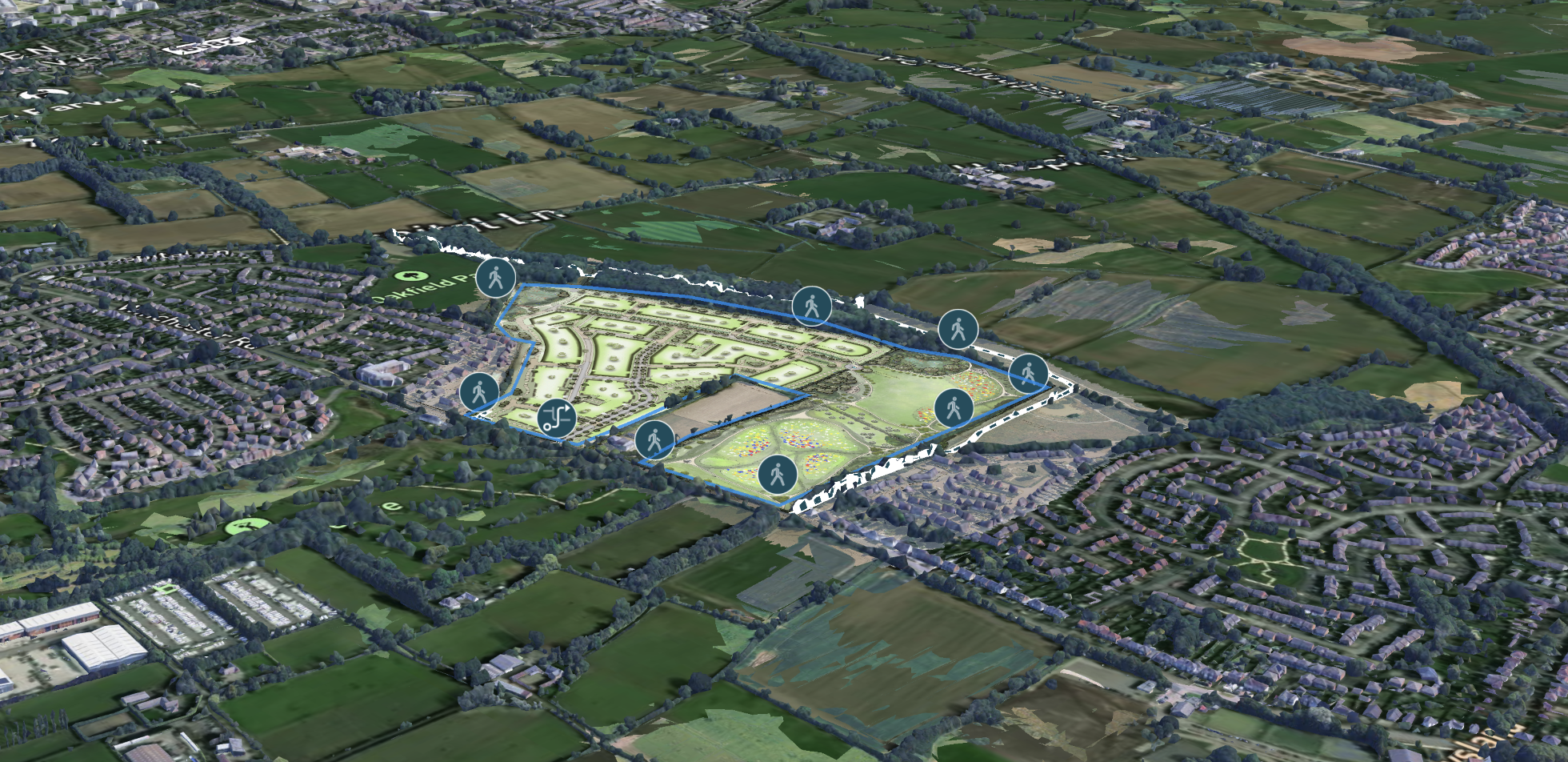
Shaping Blaby’s Growth: Early Engagement on Outline Masterplan
Context Blaby is facing a mounting housing need, with limited opportunities for younger residents and families to find affordable, well-located homes. In response, Bonnel Homes proposed a mixed development of up to 350 homes at Keepers Farm, alongside an expansive new country park integrated with nearby open spaces and walking routes to serve the wider community. The site lies on the edge of Blaby, adjoining Countesthorpe, and presents both opportunities and sensitivities: maintaining separat