




AI, objection spam and the future of planning consultation
Topics
On Monday morning, a local Facebook group celebrated a milestone: more than five thousand online objections logged to local council’s planning portal against a single scheme. Online systems such as object.now specialise in facilitating objections, and one can easily predict how AI comes to play here in producing content “in just a few clicks”. The graph looked impressive; the evidence less so. Anyone who has worked on a live case knows the pattern—near‑identical letters, sweeping legal claims, and few place‑specific insights.
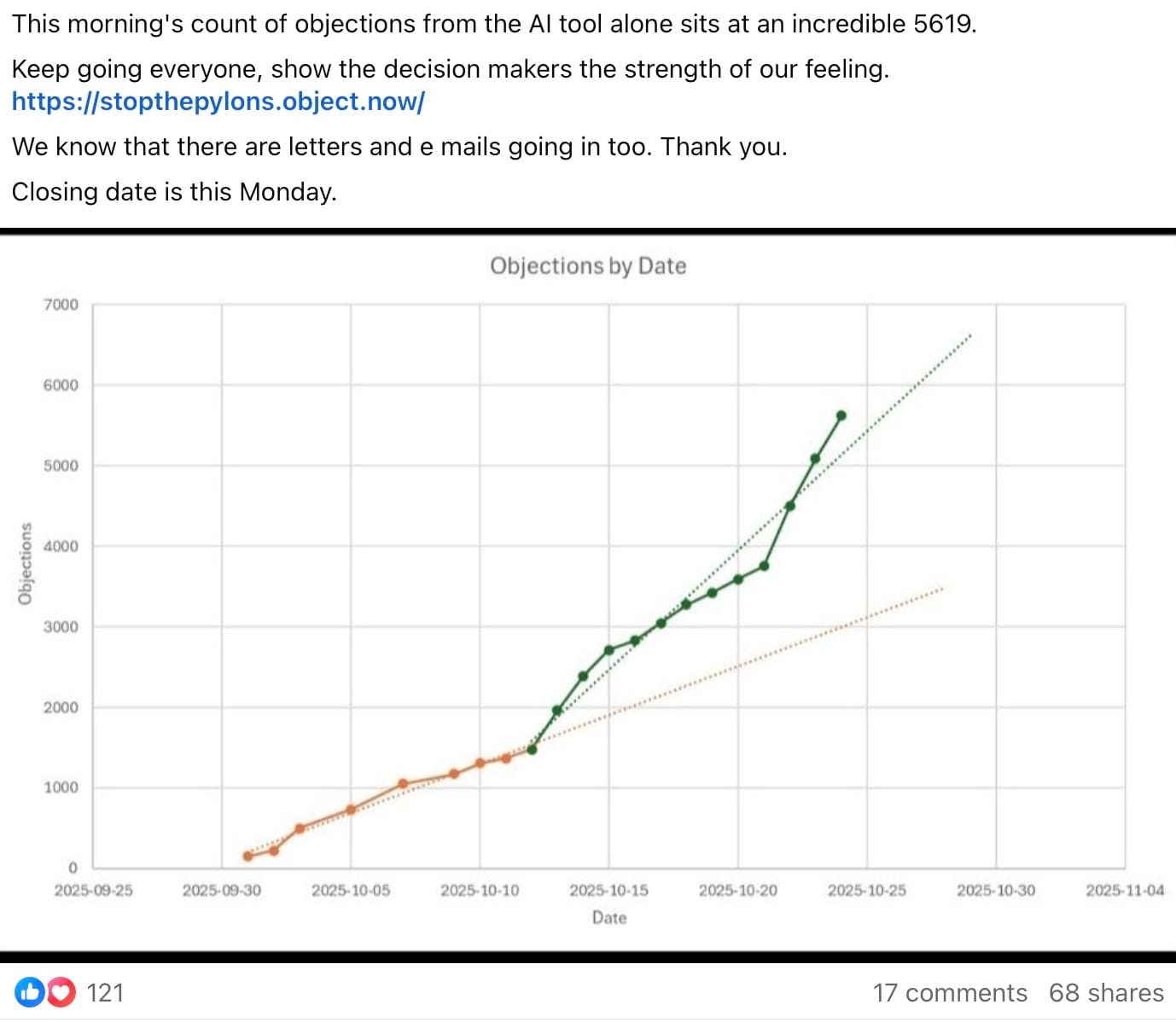
Paul Smith for Strategic Land Group, a UK developer focused on housing sites, put a clear name to this phenomenon: an emerging deluge of AI‑generated objection spam on planning portals. His observation matters because it doesn’t just add administrative burden; it could challenge the purpose of consultation itself. We ask residents because they know their area; if an algorithm writes their response, are we still hearing the place, or just a generic chorus?
The uncomfortable truth is that volumes now scale with prompts, not participation. That puts local authority case officers, members and applicants in a bind: the count of objections is politically salient even when their content adds little technical weight. Meanwhile, genuine comments—often shorter, messier and more local—risk being buried.
What is actually going wrong?
Online consultations share some traits with market research, except for the part on statistical representativeness. Both depend on authentic human input to draw meaningful conclusions.
A market research on a popular discussion platform mentioned common traits of AI-generated responses:
- Quantity over quality. Generative tools can produce long, authoritative‑sounding prose on demand. Much of it strings together familiar objections—traffic, heritage, ecology—without attending to the site’s evidence base. The result is volume without insight.
- Homogenised language. AI produces “standard English at scale” with no typos, few grammatical issues. Portals receive batches of near‑identical essays. Summaries become harder; deduplication becomes essential.
- Repetitive structures. AI-generated responses tend to repeat themselves in their logic often with overly verbose explanations.
- Fatigue and fairness. Time spent processing low‑quality text is time not spent reading thoughtful submissions. Communities with less digital confidence can be disadvantaged when the loudest channel is the easiest to automate.
We’ve seen this elsewhere
Planning isn’t the only arena grappling with AI‑amplified participation. Three concerns recur across online communities and are instructive for our field:
- Falling content quality. Moderators on large forums report that AI‑written posts often look fluent but contain errors, hedging or topic drift. The ‘human texture’—lived examples, local detail, awkward phrasing—gets ironed out.
- Strained social dynamics. When participants suspect the other side is a bot or a template, trust erodes. People post less, or retreat to smaller spaces, and genuine dialogue collapses.
- Governance overload. Detecting and enforcing anti‑AI rules is hard and labour‑intensive. Volunteer moderators and small teams struggle to keep pace with the volume and ingenuity of new tools.
Those same three issues map directly onto planning portals: quality, trust and capacity.
Don’t throw out digital consultation at pre-app stage
It’s worth pausing here.
The answer is not to wind the clock back. Online consultation has widened reach, diversified voices and allowed the presentation of complex schemes with maps, visuals and data layers that would never fit on a village‑hall display board. When designed well, digital tools help people understand trade‑offs, explore alternatives and submit place‑specific feedback in their own time.
The task, then, is not to abandon digital but to raise its evidential standard while keeping it accessible.
In our view, it also highlights again the benefits of informal consultation ahead of planning submission, where there isn’t yet the binary and very formal letter-based support and object situation that council’s planning portals expect.
Practical safeguards that work now
The survey and market‑research world has been living with bots and low‑quality responses for years. Their techniques—adapted for planning—offer practical measures that preserve openness without inviting abuse. None is a silver bullet; together they lift the signal‑to‑noise ratio.
PlaceChangers is including incentives and structures that discourage and minimise automatic submissions.
Make it harder to automate spam
The emergence of AI-generated spam will result in fewer anonymous public consultations. This may come at the expense of response rates, but in the most extreme cases will ensure trustworthy responses. Email registration to participate in consultations will be part of the future mix of validating online responses.
- One‑time verified links (sent after an email challenge) for submitting comments; stop repeat submissions from the same token.
- Rate‑limiting and IP/device checks to flag ballot‑stuffing (e.g., hundreds of entries in minutes from one origin).
Design the consultation format to surface local knowledge
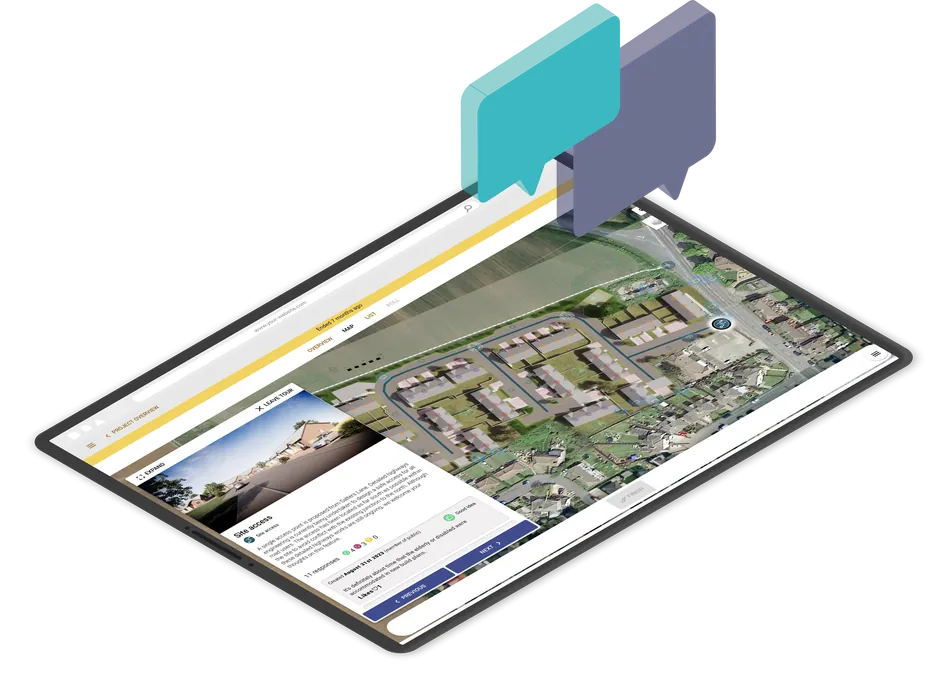
Interactive consultations on PlaceChangers provide a great opportunity to counteract the urge of a single long-form response and are designed to invoke engagement with design
- Structured prompts that ask for where and how an impact occurs (street names, plot references, times of day), nudging specificity.
- Guided tours with different stops invite a response to key design issues
- Duplicate and near‑duplicate detection with gentle deduplication in the consulation dashboard, not outright blocking.
Engage early
In our view, a key advice will still be to engage with residents early. Early outreach ensures not only that key concerns are understood and any potential opportunities for change addressed, but a well working and consistent Consultation Report submitted with a planning application will be of great help to case officers reviewing planning applications.
- Demonstrate early engagement to show what feedback was obtained and what was done about it.
What to do about AI‑written text specifically
Banning “AI” outright is neither enforceable nor always desirable—translation and accessibility tools have legitimate uses. A better approach is to focus on evidence and locality:
- Ask for identifiable local facts (“Which junction experiences the queuing you mention? When?”). AI struggles without a prompt supplying such detail.
- Limit essay boxes in favour of short, targeted questions with optional evidence uploads (photos, map pins, travel diaries).
- Weight transparency: if an analysis tool clusters 300 near‑identical essays, report them as one theme with one weight, not 300 separate points.
- Educate communities on what counts as a material planning consideration and provide examples, so their effort is channelled productively.
Looking ahead: consultation built for the next decade
We have seen the power of AI-assistance in supporting the summary of consultation responses. And now, we will also likely see a wider adoption of AI-use in consultation participant response. We should expect two parallel shifts over the coming years:
- From counting to credence. Totals will matter less than the verifiability and locality of insights — especially when it comes to informal pre-application and early stage consultations, especially where the option to respond anonymously remains. Consultation reports will increasingly include a short methodology on how duplicate, templated or non‑material comments were handled.
- From letters to interactions. Static letter‑writing will give way to interactive exploration: scenario sliders, map‑based feedback, design‑code choices, and moderated deliberation. This is where digital shines—and where AI can help summarise human input, not manufacture it.
Online planning consultation remains one of the most powerful ways to involve people in shaping places. But we must stop aim for volume. If we centre verifiable, place‑specific evidence—and adopt common‑sense protections—we can keep the door open to everyone while closing it to objection spam. That protects the trustworthiness of consultations, protect analysis time and, most importantly, the civic promise of consultation itself.
Run interactive community consultations online
Book a demo or start your free trial today.
Start Free TrialGet new articles in your inbox
Subscribe to get more insights like this delivered to your inbox.
Related Articles

Managing community consultation across multiple planning projects
The answer is not to make every consultation identical. It is to create a repeatable delivery model that still leaves room for local context.
From Plan to Proof: How to Simplify Consultation Outreach and Response Tracking
Learn how planning teams can plan consultation outreach, invite the right households, and keep a clear record of responses, materials and follow-up actions with PlaceChangers.
How to Turn Public Consultation Feedback Into Clearer Reports for Stakeholders
Stop manual spreadsheet data entry. Learn how AI-driven urban planning software turns messy public consultation feedback into professional, stakeholder-ready reports for the built environment in minutes.