





The six key benefits of early community engagement for larger development schemes
Topics
When planning a development scheme, the temptation for developers to skip, accelerate or water down up-front engagement can be hard to resist. This can result in a vast number of poor design decisions becoming set in stone early on with little potential for change later on.
Making decisions without stakeholder involvement will generate immediate resistance to your project, regardless of its merits or benefit locally. For a great example of how not to do things, look no further than Lambeth Council’s proposal to demolish 300 homes for redevelopment in the Cressingham Gardens estate, where it was taken to court by a tenant and found to have acted unlawfully by removing three options from its initial consultation.
Effective community engagement should begin at the earliest possible stage. Done proactively (by being planned in), it can be a powerful tool to help catalyse your project. It also helps to uncover solutions to issues that you could not have known before refining the design. Doing it sloppily or not at all will create the wrong type of publicity. At worst, it could result in a longer-than-necessary planning permission process while proposals are returned and need reworking.
Here are my top six reasons why early community engagement is essential.
Understand valuable insights early on when they have the greatest change to influence the proposals
Informing the community of your project and involving them in your research at the preliminary stages of your project means you’re getting local insight from the very beginning. You get a better understanding of the impact of your proposals and you can ensure that stakeholders are fully aware of the proposed benefits.
When the Netherlands government set out plans to expand Schiphol airport in 2006, they quickly came under heavy criticism from local and regional voices. To build support, a permanent consultative body known as the Alders Table was founded, bringing together residents, unions, government officials and the aviation industry.
“The forum’s recommendations have largely been adopted by the government, including capping the number of flights per year and limiting night-time activity. In 2008, the Alders Committee recommended that Schiphol be allowed to expand, but did not provoke the unhappy response that had occurred two years previously. This purpose-built institution for engagement has allowed the government to pursue a policy of airport expansion, which had otherwise been thwarted by public opposition.” Adapted from Institute for Government (2015)
Build rapport with residents by showing integrity and appreciation of their concerns
By offering transparent insight into how you work and giving stakeholders a chance to have a genuine say in decisions that affect them, you can break down barriers and reduce any misgivings about your organisation. This credibility is essential when it comes to developing a wide base of support for your project.
Strengthen proposals by responding to weaknesses in the local area
The earlier you get an understanding of the challenges within the area, the fewer major changes you will need to make later in the process. Gauge stakeholders’ reactions to your proposals and identify where the issues with local services are. You can then establish a far more robust plan by relating your designs in was to address local challenges while progressing a robust business case for the development.
Develop your relationships in the area
Giving residents a sense of influence helps them develop a greater sense of pride and belonging to their local area. Projects are most successful when this is done from the start, where stakeholders’ feedback is acknowledged and acted upon throughout the process. This can bring about support and also help establish relationships with potential buyers from within the local area. On the other hand, even a negative response to feedback often helps rather than no response at all.
Reach the right people to receive a balanced response
Conducting piecemeal community engagement at the latter stages of a project invariably means you will end up speaking to the people who object the most, while alienating those who might have approved of your development had their concerns been heard. Again, if key stakeholders feel that their views or concerns have been ignored in the early stages, there is a strong chance that they will pose more strident objections whenever the opportunity presents itself. By involving more people earlier, you can obtain a far more balanced view of your project. And by addressing those concerns faster, you’re able to mitigate the strength of any objections.
Reduce your chances of planning application refusal
The refusal of a planning application is the worst that could happen to any development project. Local objections to development proposals are a major factor in applications being refused by councillors. Appealing a decision can take 19 to 38 weeks to conclude, and of the 11,445 appeals that were decided in 2016/17, only 33% were allowed. The cost of the appeals process is also eye-watering. By engaging earlier, you can avoid these headaches by reducing local resistance and increasing the likelihood that your application will succeed.
Starting to engage early pays off later
With the right approach, early community engagement presents a genuine asset to the development of designs and, therefore, is a fundamental advantage to robust planning projects.
Without proper community engagement, projects can incur large costs later on, especially when key concerns are raised just at the very last minute before the planning application is handed in, or even during the official consultation process arranged by the local authority. By that time, all potential risks and challenges towards the project should be well understood.
If you currently think of community engagement as a costly, burdensome, and risky enterprise, give digital tools a try that can reach a much wider audience via online news and social media, but at a relatively lower cost than a typical public exhibition, for instance.
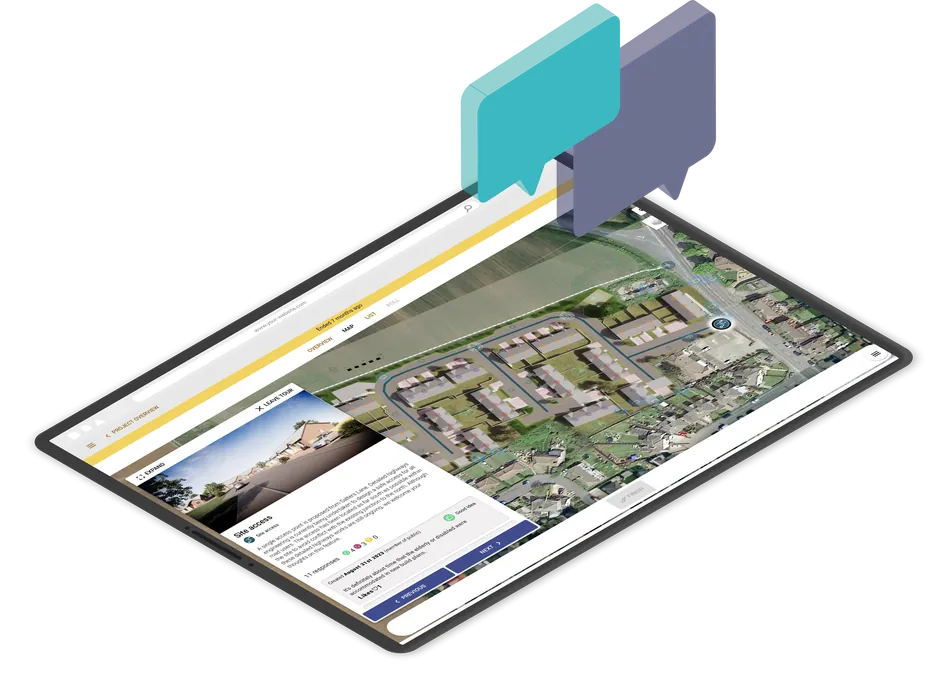
Run interactive community consultations online
Book a demo or start your free trial today.
Start Free TrialGet new articles in your inbox
Subscribe to get more insights like this delivered to your inbox.
Related Articles

From House Types to Housing Evidence: Making Standard Designs Reusable Across Consultations
Enabling housing evidence and better quality designs from resident-feedback on house types.

Managing community consultation across multiple planning projects
The answer is not to make every consultation identical. It is to create a repeatable delivery model that still leaves room for local context.
RIBA Stages 2 to 4: digital community engagement tools that actually help design teams
What digital engagement tools are actually useful once the design starts to take shape?