





Health Impact Assessments in Planning: A Practical Resource Hub
Topics
About This Hub
This hub serves as a practical starting point for planners, developers, and consultants seeking to understand and deliver high-quality Health Impact Assessments (HIAs). Whether you're new to HIA or looking to review your workflow, this page connects you with all our structured guidance, introduces the place data and review tools on PlaceChangers, and several real-world examples.
PlaceChangers is a digital platform purpose-built to support design teams with key planning activities —like health impact reviews — through pre-aggregated data, handy visualisation, community engagement, and policy-aligned HIA guidance templates.
From nationally recognised frameworks like HUDU to local data integration and spatial analytics, PlaceChangers has been used by developers and town planners to simplify the HIA process while enhancing its credibility and impact.
What is a Health Impact Assessment?
In simple terms, a Health Impact Assessment (HIA) is a structured process that evaluates the potential health effects of a proposed development or policy before it is built or implemented.
In planning, HIAs help ensure that the design of neighbourhoods actively supports better health outcomes, addressing concerns like walkability, access to green space, air quality, and proximity to health services. HIAs provide a human-centric perspective on any impacts a development might generate — positive and negative — while recognising interventions made to mitigate negative impacts.
Many town planners and developers are now to HIAs. If you’re new to HIAs or looking to improve your planning application submissions, this hub will guide you through the essentials.
For a deep dive, see
Why HIAs Matter in Planning and Development
Integrating health considerations into planning is no longer optional for many projects—it’s becoming a recognised standard. If integrated into the design, HIAs offer several practical benefits:
- Recognise community-, place, and local assets-specific characteristics
- Demonstrate social value to planning authorities
- Help meet national and local policy requirements
- Support community wellbeing and long-term health equity
Read more:
Built-In Support for Trusted HIA Frameworks
HIA delivery in town planning has typically been very niece and fragmented. In the UK, there are a couple of frameworks that are nationally recognised in practitioner circles and local health officers. And at times, local councils may have adapted local versions for health impact assessments for planning applications.
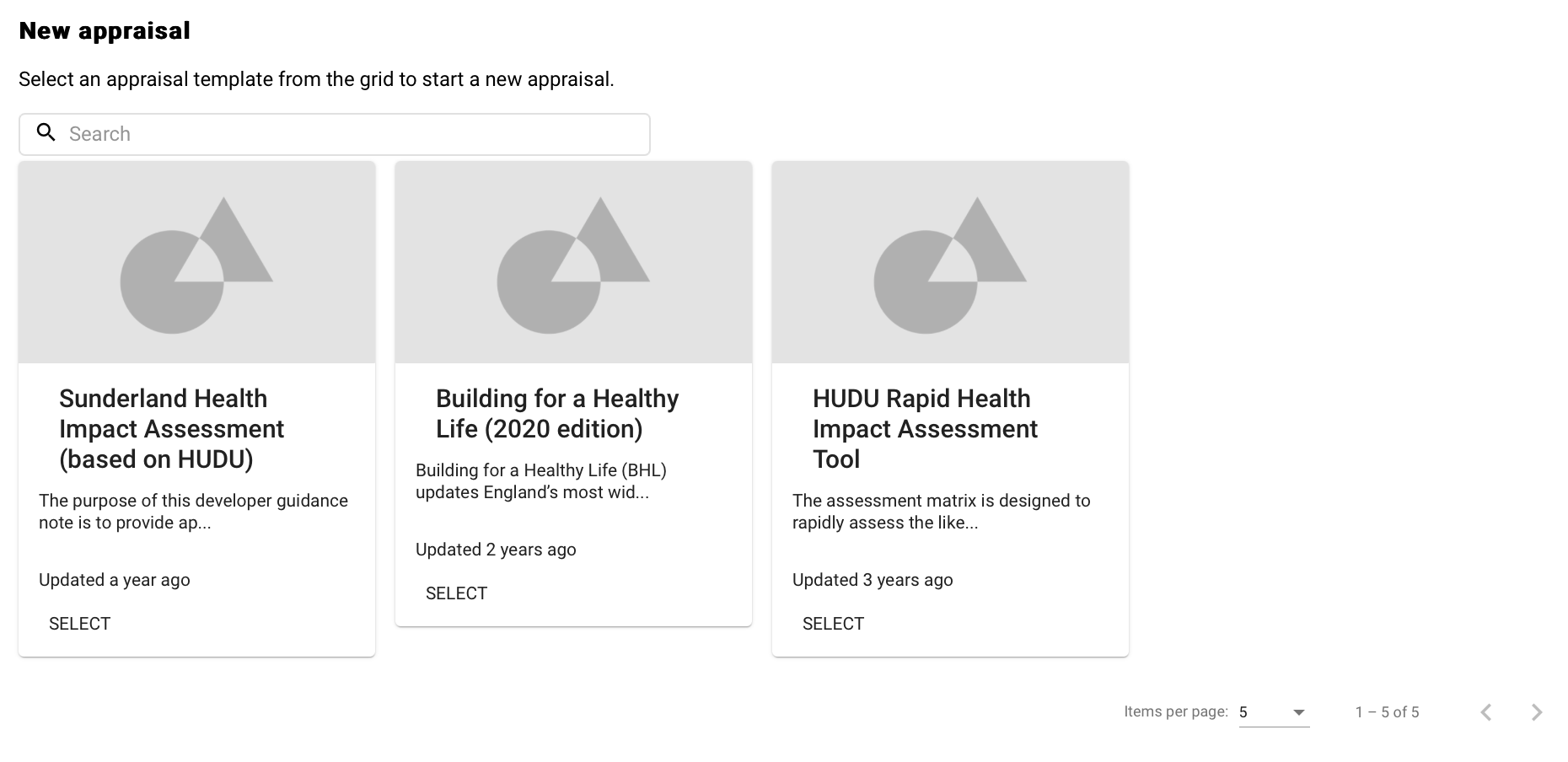
PlaceChangers impact appraisal tool includes ready-to-use templates and tools that align with widely recognised HIA frameworks:
- HUDU Rapid HIA Tool
- Public Health England indicators
- Several local council HIA guidance
These are embedded within the platform to help you scope, evaluate, and report HIAs efficiently—whether you're conducting a full assessment or a rapid review.
Using Place Analytics to Support HIAs
Health impact assessments need to be underpinned by evidence. These days, there's an abundance of planning-specific spatial data available, making this in some ways easier than ever, but also overly complex.
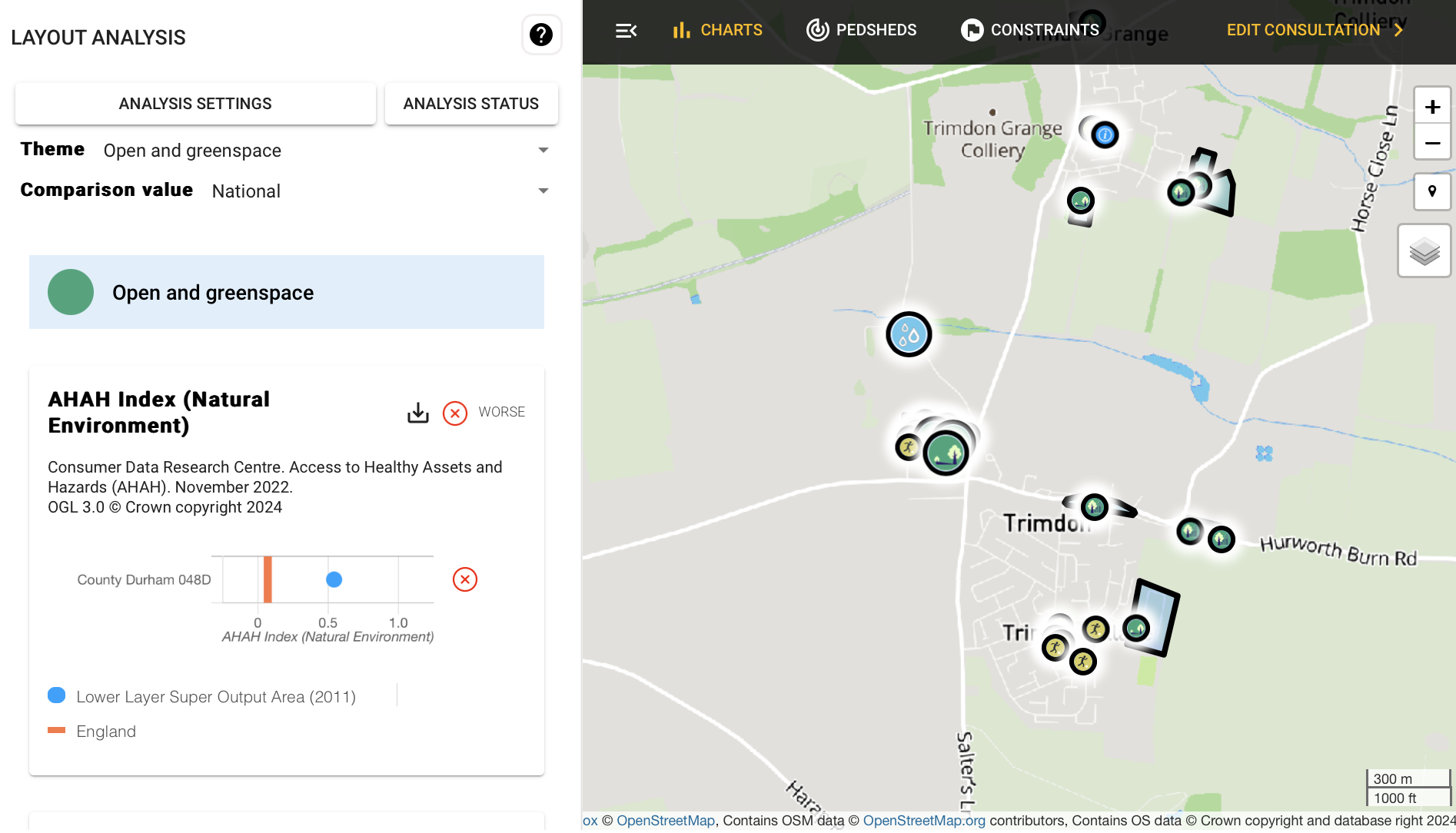
The PlaceChangers platform integrates powerful place analytics to enhance your HIA process:
- Visualise population health data and deprivation indices
- Analyse walkability, connectivity and transport access
- Map local services like GPs, schools, green space and food outlets
- Have automatic national comparisons to judge performance of local areas
Find out more:
Real-World Case Studies
PlaceChangers has supported a variety of health-focused planning projects:
- Eden Planning Leverages PlaceChangers for Rapid Health Impact Assessment
- Design Quality Reviews on 21 sites supported by Place Analytics
- Health impact assessment for new homes accelerated by PlaceChangers toolkit
These examples show how HIAs can inform better decisions, streamline approvals and enhance community outcomes.
How to Conduct an HIA: The Basics
Here’s a simple breakdown of the key stages in conducting an HIA:
- Scoping – Identify relevant health issues for the site
- Evidence gathering – Collect data on population health, environment and context
- Stakeholder input – Engage communities and relevant partners
- Assessment – Analyse positive and negative impacts
- Reporting – Summarise findings and recommendations
- Submit – Submit your HIA for review to the local councils' public health team
- Monitoring – Track outcomes where appropriate
PlaceChangers place analytics and impact review tools support each step—see our in-platform HUDU-aligned checklist for a structured approach.
Related Reading:
Frequently Asked Questions
What is a rapid health impact assessment?A shorter version of a full HIA, typically for smaller or less complex developments. PlaceChangers includes tools to conduct these quickly and credibly.
Do I need an HIA for every planning application?Not always. Requirements vary by local policy, but HIAs are increasingly expected for major schemes or those with potential to affect population health.
Can PlaceChangers help consultants or developers?Yes—our tools are designed for planning consultants, developers, and local authorities, simplifying assessment and reporting.
Get Started with Health-Centred Planning
PlaceChangers' platform helps you align with policy, engage communities and make data-driven planning decisions—all in one place.
Book a demo or explore our product page.
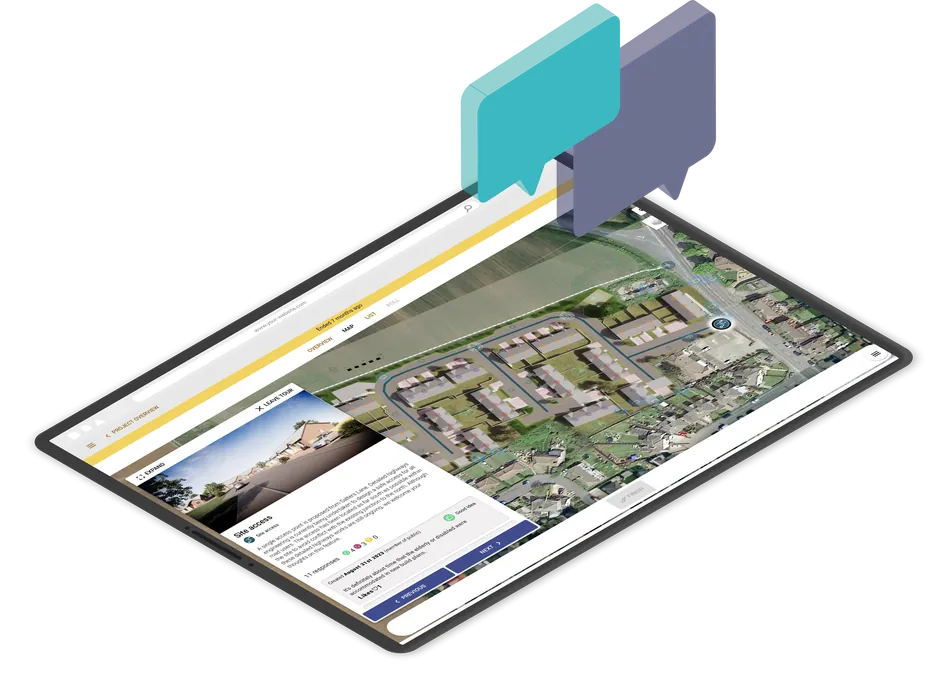
Run interactive community consultations online
Book a demo or start your free trial today.
Start Free TrialGet new articles in your inbox
Subscribe to get more insights like this delivered to your inbox.
Related Articles
Site Visits in Town Planning and Design: What Project Teams Look For and Why It Matters
Learn why site visits matter in planning and design, what project teams look for on site, and how site-based evidence supports planning applications, design decisions and stakeholder engagement.

From Plan to Proof: How to Simplify Consultation Outreach and Response Tracking
Learn how planning teams can plan consultation outreach, invite the right households, and keep a clear record of responses, materials and follow-up actions with PlaceChangers.
How to Turn Public Consultation Feedback Into Clearer Reports for Stakeholders
Stop manual spreadsheet data entry. Learn how AI-driven urban planning software turns messy public consultation feedback into professional, stakeholder-ready reports for the built environment in minutes.